
How we choose the people
who work with your kids
School just let out. Your child is walking toward the meeting spot, where an instructor is waiting.
Does that person look up? Know their name? Notice if they hang back?
Before a project begins or a game gets going, children are already learning what to expect from the adult in charge.
That is where we start when we hire at BAM. Across our enrichment classes, after-school programs, and summer camps, we look for people who notice and know what to do next.
What your child feels in the first minute
Ask our program managers to describe a strong instructor, and a familiar picture emerges.
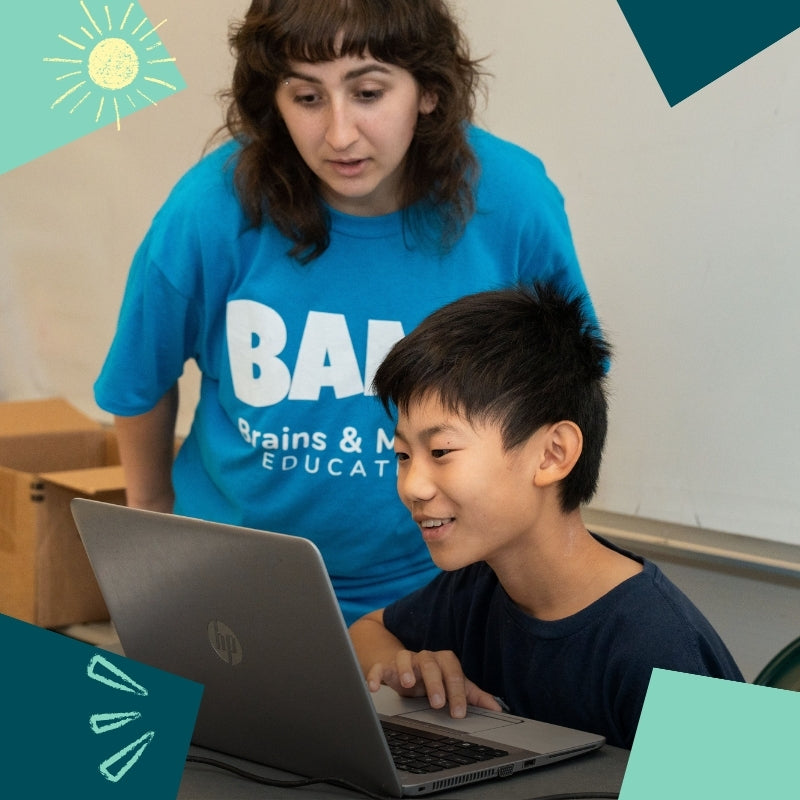
They are prepared before the first student arrives. They know the day’s lesson and have the materials ready.
They get down to eye level. They ask questions. They make learning names a priority.
Their phone is in their bag.
Children notice these things. Together, they send a simple message: someone is paying attention, and I belong here.
The best instructors help children notice each other, too. They introduce kids who haven’t met. They spot the child working alone at the end of the table and help them find a way into the group. Your child may come home talking about a robot they built. They may also have made a friend while building it.
And good instructors hold a room with warmth. Expectations are clear and consistent, and they come from an adult who enjoys being there. Children need structure and kindness. They should experience both in the same hour.
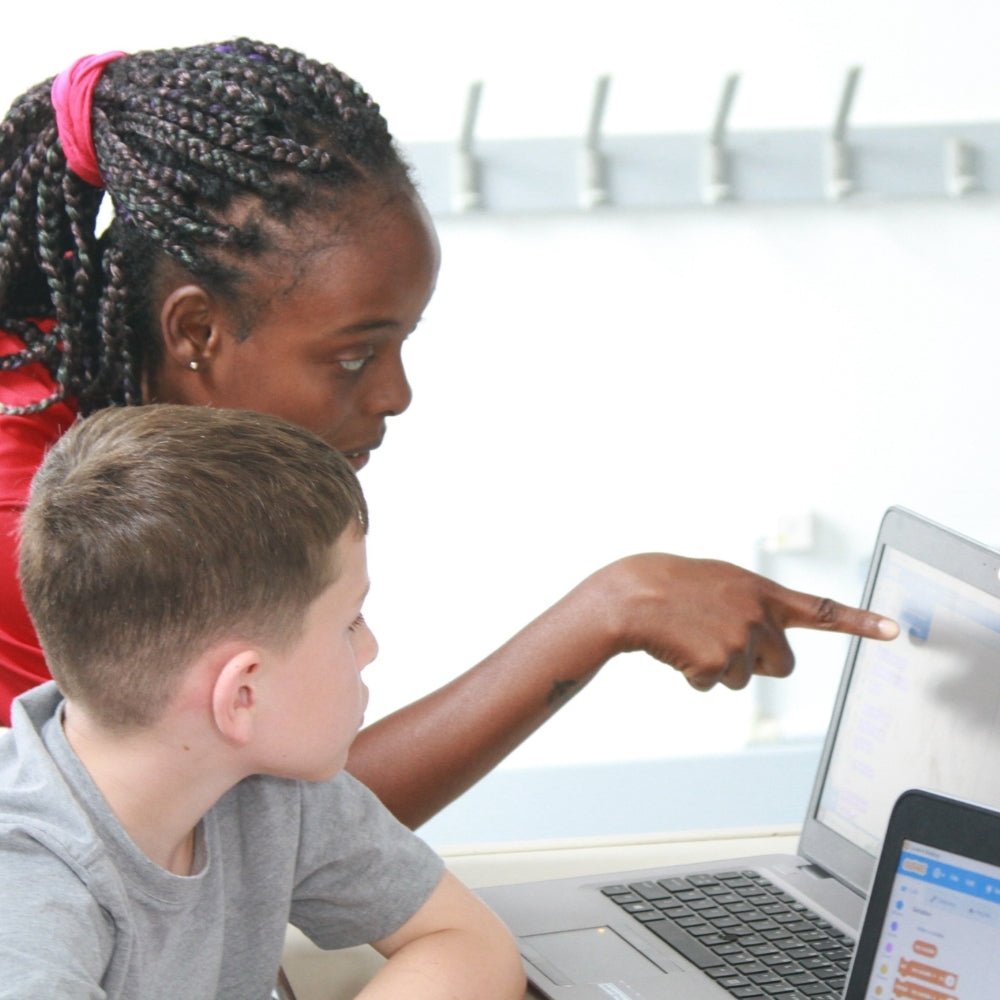
Someone is paying attention.
I belong here.
What we listen for in an interview
“I care about kids” is a starting point. We want to understand what that care looks like in practice.
Our interviews draw on situations instructors encounter: a student becoming overwhelmed during a lesson, a child who has quietly stopped trying, or someone who finishes early and needs another challenge.
We ask candidates to walk us through something they have actually handled. Interviewers trained to use a written rubric score their responses against shared criteria.
For example, we ask about a time a candidate noticed a problem developing and acted before it escalated.
The first answer might be simple: a child was getting frustrated, so the candidate stepped in to help.
Then we ask more.
What did you notice first: their hands, their voice, their expression? What was happening in the room? What did you say? How did the child respond? What did you try when your first approach did not work?
Those follow-ups help us understand the choices a candidate made and why.
We listen for attention, judgment, and a willingness to learn. Can they recognize when a child needs help? Can they adjust their approach? Can they explain what they would do differently next time?
These are the habits we want instructors to bring into a room full of children.
Safety comes first
Families and schools deserve a clear account of how we prepare adults to work with children.
Our hiring process includes background checks, and instructors complete safety training before working with kids. That training covers emergency response, mandated reporting responsibilities, recognizing hazards, and appropriate conduct around students, staff, and families.
These responsibilities are fundamental to the job. The projects, friendships, and gloriously messy experiments all depend on children being safe and supported.
Support continues after hiring

Being selected is the beginning. Instructors need training, practice, and someone to turn to when a situation is harder than they expected.
Alongside safety training, instructors receive training in curriculum and classroom & behavior management. They learn how to guide children through the activities, set clear expectations, and respond when a child or a group needs help getting back on track.
That preparation continues in the program. Our program managers observe instructors beyond their first day. They watch how transitions go, how the group responds to directions, and whether anyone is being left at the edge.
Then they coach.
That might mean helping an instructor open a class, reset a restless group, or get twenty-four children into a line without raising their voice. It means turning feedback into something the instructor can use the next time they lead.
Some of our strongest instructors needed that help in their first week. With practice and support, they became the people children look forward to seeing.
We find good instructors.We grow great ones!
We learn from every season
We also look at our own decisions.
At the end of a season, we compare what we heard in interviews with how instructors did in their programs. Which answers gave us useful insight? What did we miss? What should we ask more about next time?
We use what we learn to coach our hiring managers and improve future interviews. Experience in our programs helps us make better hiring decisions.
For schools and districts, that connects the hiring process to what happens on campus. For families, it means the care we take in choosing an instructor continues after that person gets the job.
Wherever you happen to be standing
If you are a parent:the person waiting for your child at that meeting spot was chosen carefully, by people listening for how they would care for your child in everyday moments. Speaking as a parent myself, that is what I want to know at drop-off: that my son is with adults who are looking out for him, and that he comes home happy, healthy, and safe.
Explore after-school programs ↗If you lead a school or a district:you are handing us your students, your campus, and your community’s trust. We take all three seriously. That responsibility shapes how we select instructors, prepare them for your campus, and follow through with observation and coaching. You deserve a partner who stays involved after the program begins.
Explore school partnerships ↗And if you are thinking about joining us:if you care about kids and are willing to be coached, there is room for you here. We will train you, support you, and show up for you. Come be the person waiting on the blacktop.
Explore instructor opportunities ↗